






Trekking/Walking Grading
Conditions that may affect grading Please
remember that it is impossible to be absolutely precise about how hard
a walk may be, as there may be many contributory factors. The main
benefit of grading is to provide you with an overall indicator to
compare one walk against another. W therefore look at the following 6
factors before deciding the grade: a.. Length of trek and length of walking day. b.. Average altitude and altitude gain and loss. c.. Trail conditions. d.. Level of porterage or backpacking. e.. Temperature range and likely weather conditions. f.. Remoteness to services and general level of comfort.
THE GRADES EASY A:
Experience is not necessary at this level: anyone who is in good health
and fit enough to enjoy a good weekend hill walk can manage an A grade.
Usually, A grade treks are short in duration and at lower altitudes.
However, walking always involves some exertion: trails are seldom flat,
and you must still expect to have a reasonable amount of ascent and
descent. You would normally walk for 5 to 6 hours during the day.
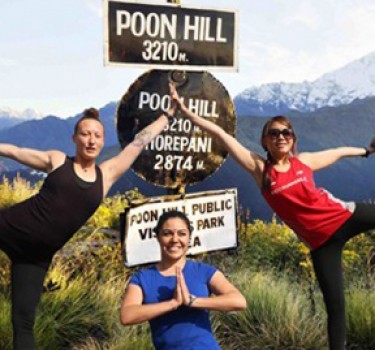
Typical holidays at this grade:Poon Hill trek/Langtang trek
MODERATE B:
Most people who enjoy a weekend in the hills or mountains at home are
capable of undertaking a trek at this level: you need to be in good
health and reasonably fit, and you will almost certainly be taking
regular exercise. A trek could be graded B either as a fairly easy
medium-duration walk, or as a harder, shorter walk. Some walking at
higher altitude and the occasional longer or more difficult day may be
involved, but generally conditions underfoot will be fair. A walking
day would normally be between 5 to 7 hours long and no experience is
necessary. Typical holidays at this grade: Jomsom/
Muktinath/Gosainkunda/Annapurna Base camp
STRENUOUS C:
For any trek at this level, fitness is most important and you may have
to improve yours before departure. Most C grade treks are equivalent to
extended walking in mountainous terrain at home, but usually at
significantly higher altitudes; climate and remoteness can also play a
part. Walking days are usually between 6 to 8 hours although there may
be some longer days for pass-crossing or similar. Previous trekking
experience is desirable but not essential if you are confident of your
physical condition. Typical holidays at this grade:Annapurna
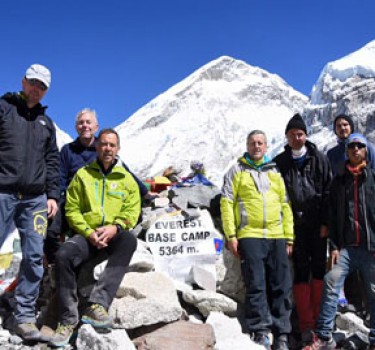
Circuit/Kalapathar/Everest Base Camp
TOUGH D:
At this level we recommend previous experience of trekking, preferably
at altitude, and you need complete confidence in your physical
condition and your ability to trek for many days without a break and be
able to cope with difficult underfoot terrain such as scree, very high
or difficult passes on steep mountainsides. Extremes of altitude and
weather may also be encountered, and on somentreks it may be necessary
to use ice axe and crampons. Stamina is very important, as walking days
can be from 6 to 9 hours or even longer on pass-crossing days. Typical
holidays at this grade: Trek crossing high passes like Apu laptsa,
French pass, Tashi laptsa
VERY TOUGH E:
To earn an E grade, a trek is likely to involve all the elements of a D
grade plus extra factors of significant difficulty - tricky river
crossings, very high or difficult passes, glaciers, or trekking peaks
where basic climbing skills be required. Often some special equipment
such as ice axe and crampons will be needed and if so we require you to
have experience of them. While normally walking for 7 to 9 hours a day,
you should be prepared for up to 11 hours or on some climbs even
longer. Typical holidays at this grade:Trek combine with Trekking peak
climbing or Trek crossing high passes like Serpeni col
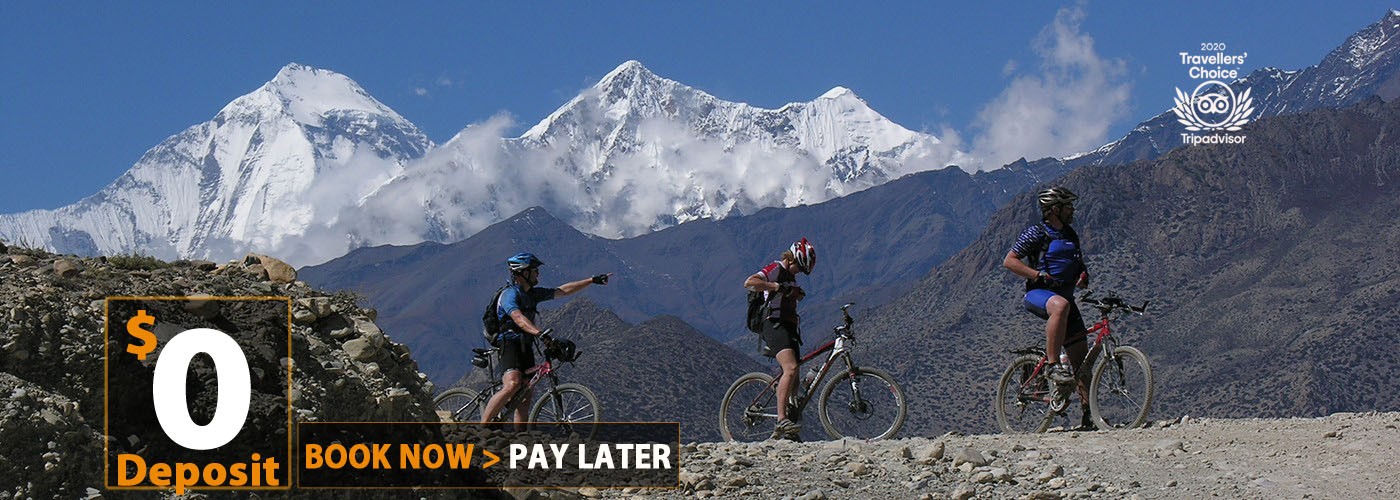
TTG BIKING GRADING Trip Classification Grading Our
mountain biking adventures are vehicle-supported wherever practicable.
As well as enabling you to ride with only your usual day-ride gear,
this also means that you can hitch a ride if you find the going too
tough. Some of our more challenging trips include sections of
unsupported riding, with the group meeting their crew and back-up
vehicles at the next overnight halt. All trips will involve riding on
rough tracks or dirt roads, escaping where possible off road on to
rough jeep tracks and single track trails.
THE GRADES Easy,
Moderate, Strenuous, Demanding Factors affecting grading include:
degree of up/down, difficulty of the surfaces to be ridden, amount of
bike handling skill required, distances covered and other factors such
as heat, altitude or remoteness. All our trips require basic fitness,
preferably acquired through riding your bike, and please remember that
any cycling involves some physical exertion, so you cannot expect that
you will not feel tired on an easy trip.
NB:
Conditions for a particular holiday may vary from one month to the
next. The main benefit of grading is to provide an overall indicator to
compare one trip against another.
EASY-Suitable
for anyone who can ride a bike and can manage a bit of exercise. No
routes are 100% flat, so expect some climbs and descents.Typical
holidays at this grade:Kathmandu valley day trip.
MODERATE (B)-
suitable for keen mountain bikers, some quite tough days at low to
moderate altitudes. A good mixture of terrain will provide the
opportunity to develop single track riding experience. Typical holidays
at this grade: Ride from Pokhara to Kathmandu
STRENUOUS (C)- these trips provide a considerable challenge for
the regular weekend mountain biker. Continuous hard riding, with long
climbs at moderate to high altitudes.Typical holidays at this grade:
Hile to Dhankuta
DEMANDING (D)-
our toughest bike trips, long days, big climbs and at times technically
difficult single track riding at high altitudes. A real, sustained
workout, even for fit and experienced mountain bikers. Typical holidays
at this grade:Lhasa to Kathmandu
TTG CLIMBING GRADING A number of our adventures include an
element of climbing, usually on snow, where ropes and other items of
mountaineering equipment will normally be used. These trips have each
been given a trekking grade to reflect their overall difficulty and it
is this grade which is shown on their grade symbol. Additionally, each
of these trips has a climbing grade which is intended to indicate the
technical difficulty of the ascent(s) involved and takes into account
factors such as overall steepness, exposure and objective dangers.
EASY-
our easiest climbs, which are generally on easy angled snow-slopes,
with no objective dangers. A mountaineering ice-axe and crampons may be
used, depending on the prevailing conditions. Ropes may be fixed on
short, steeper sections of ascent.
MODERATE-
elements such as crevasses and steep snow slopes may be encountered. A
mountaineering ice-axe and crampons will be used. Ropes may be fixed on
steeper sections of the climb and group members may need to climb roped
together at times.
DEMANDING-
applied to our toughest climbs - involving long climbing days, possibly
at extreme altitudes, with steep snow slopes, exposed ridges and
crevassed sections.
GRADING FOR OTHER TTG ADVENTURE Our
special collection of themed adventure journeys are all very different
in nature, ranging from gentle family adventures to demanding
mountaineering expeditions. However in order to give an indication of
their overall level of difficulty these trips have each been given a
trekking grade and it is this grade which is shown on their grade
symbol.
|